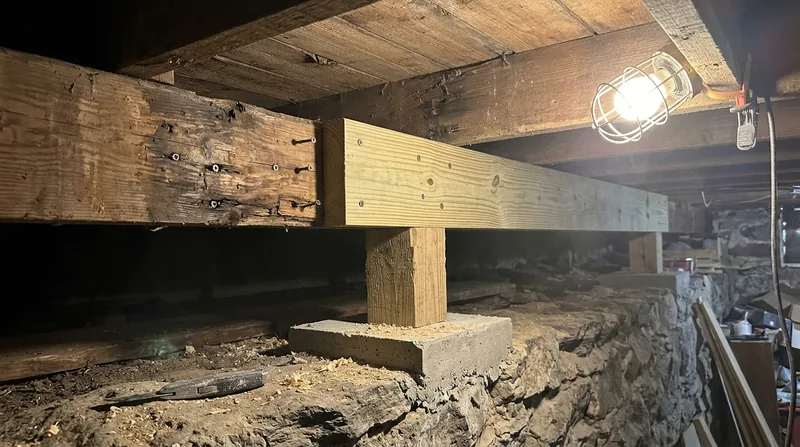




Sagging, bouncy or soft floors in Bridgeport's older homes usually trace to joist ends rotted over damp fieldstone basements, insect damage at the sills, or a century of plumbing notches in multi-family houses. Floor joist and subfloor repair restores structural integrity and prevents further settlement. Our approach depends on the extent of decay: we sister compromised joists where the wood has structural value, or replace them entirely when rot has gone too far. Bridgeport's mix of late-1800s Victorians, Queen Anne homes in Black Rock, factory-built two- and three-family houses on the East End, and post-war Capes across the North End all share the same vulnerability. Damp coastal air, nor'easters, and freeze-thaw cycles at the foundation line accelerate rot in sill plates and joist ends. We level floors before finishes go back down, and we work from your own pest inspection report if insect damage is involved.
Why Floor Joist and Subfloor Repair Matters in Bridgeport's Older Homes
Bridgeport's building stock sits on old foundations. Most Victorian and early-20th-century homes rest on fieldstone or poured concrete basements where moisture wicks up into wood sills and the ends of floor joists. Multi-family houses built for factory workers often have notches cut into joists to run plumbing or HVAC ducts, which weakens them. Over decades, wood rot spreads quietly, and the floor begins to sag or feel soft underfoot. This isn't a cosmetic issue: a compromised joist system can affect how doors close, how walls sit, and ultimately the value of your home. Addressing it early prevents cascading damage to rim joists, band boards, and the framing above.
- We inspect the full joist bay to identify which joists are sound and which need sistering or replacement.
- We assess moisture sources at the sill and recommend ventilation or drainage improvements to slow future rot.
- We sister new lumber alongside compromised joists when the existing wood still carries load, preserving the original framing.
- We replace joists entirely when decay has consumed more than one-third of the cross-section or when the wood is too soft to nail.
- We rebuild subfloor sections with new plywood or tongue-and-groove boards, fastening to the repaired joist system.
This staged approach keeps costs down and respects the craftsmanship in older homes.
Key info: In Black Rock and other South End neighborhoods near the water, salt air and seasonal nor'easters accelerate rot at the sill line. We've pulled joists from 1890s sea-captain houses where the entire end grain was soft, and others where just the outer ring was compromised. The difference determines whether a sister joist will work or replacement is the honest answer.
How We Repair Floor Joists and Subfloor in Bridgeport: Our Process
We start with a thorough inspection. We probe the joist ends, sill plate, and rim joist with a awl or moisture meter to map the extent of rot. We look for soft spots in the subfloor, check for active moisture or standing water in the basement, and identify any plumbing or electrical work that's been cut into the framing. Once we understand the scope, we shore up the floor temporarily if needed, then remove rotted wood in stages so the house stays level and safe. We sister new joists alongside sound ones, or replace joists entirely, always fastening with structural screws or bolts per code. Finally, we rebuild the subfloor and make sure the finished floor sits level before trim and flooring go back down. This is also a good time to address wood rot and dry rot repair at the sill if it's present.
- We probe and document rot depth and moisture content before making any cuts.
- We shore the floor with temporary posts and beams to hold the house level during the repair.
- We remove rotted joist ends or the entire joist, depending on the extent of decay.
- We sister new lumber (typically pressure-treated or Douglas fir) alongside the sound portion of the original joist.
- We rebuild subfloor sections with new plywood, fastening every 8 inches to the new joist system.
- We level the floor and remove shores once the new framing has set.
The entire process preserves the character of older homes while restoring safety and function.
Example: A 1920s foursquare in Brooklawn near the Fairfield line had a 2-inch sag across the front of the house where two joists had rotted at the sill. We sistered new joists alongside the sound inner portions, rebuilt 180 square feet of subfloor, and leveled the floor before the owners refinished their hardwood. The original joists stayed in place, and the repair cost less than full replacement.
Floor Joist and Subfloor Repair Methods: Which Approach Works Best
| Approach | Description | Best for |
|---|---|---|
| Sistering | Bolting a new joist alongside the original, sharing load and nailing patterns to tie them together. | Rot limited to the outer 1 to 2 inches of the joist end, or decay in the outer ring of a sill plate where the inner wood is still sound. |
| Full Joist Replacement | Removing the entire joist and installing new lumber, fastened to the sill plate and rim joist with structural fasteners. | Rot has consumed more than one-third of the cross-section, the joist is soft or crumbly, or multiple joists in a run are compromised. |
| Sill Plate Repair | Removing and replacing the rotted sill plate in sections, sistering new lumber under joist ends, and bolting to the foundation. | Rot is concentrated at the sill line where joists meet the foundation, common in Bridgeport's fieldstone basements. |
| Subfloor Replacement | Removing and replacing rotted or water-damaged subfloor plywood or boards after joists have been repaired. | Subfloor is soft, warped, or has active mold or moisture damage, usually after a plumbing leak or foundation seepage. |
Floor Joist and Subfloor Repair Cost in Bridgeport: What to Expect
Floor joist and subfloor repair typically starts at $1,800 for a single joist with moderate rot and a small subfloor patch. The cost climbs with the number of joists involved, the extent of rot, access to the basement, and whether the sill plate also needs repair. A typical job in Bridgeport might involve two to four joists, 200 to 400 square feet of subfloor, and moisture mitigation at the sill, running $4,000 to $8,000. Jobs that require extensive shoring, multiple joists across the full width of the house, or work in tight basements with low headroom will cost more. We recommend getting two or three estimates so you understand what's being repaired and why. See our full pricing overview for more detail on how scope affects cost.
Factors that move the price up include the number of joists, the total square footage of subfloor to rebuild, moisture or drainage work at the foundation, and the complexity of shoring. Older homes in Bridgeport often have plumbing or electrical work that complicates access, which adds labor. We charge for the estimate itself only if you decide not to move forward; if you hire us, the estimate fee is waived.
Hiring a Carpentry Contractor Near Bridgeport: What to Look For
When you're looking for someone to repair floor joists and subfloor, start by asking whether they'll inspect the full joist bay and explain what they find before quoting. A good contractor will show you the rot with a probe, explain why sistering or replacement makes sense, and discuss moisture sources in your basement. Ask for references from recent structural carpentry work, and call at least two. Make sure they carry insurance and can show you a certificate. Get multiple estimates so you can compare scope and price. If your home is in a historic district or listed on the National Register, check with your local Bridgeport building department about whether the repair needs to follow historic guidelines. Call us at (475) 476-1794 for a free estimate, or visit our contact page to request an inspection. We respond within 24 hours and will walk you through what we find.
- Ask the contractor to probe the joist ends and sill plate and show you the moisture content and rot depth.
- Request references from at least two recent jobs involving floor joist or subfloor repair.
- Verify that the contractor carries liability insurance and will provide a certificate of insurance before work begins.
- Get written estimates from at least two contractors so you can compare scope, materials, and price.
- Ask about moisture solutions at the sill and whether ventilation or drainage improvements are part of the scope.
- If your home is in a historic district, confirm that the contractor understands local preservation guidelines.
The right contractor will take time to explain the pathology and propose repair before replacement whenever the wood justifies it.
Floor Joist & Subfloor Repair in Bridgeport: Pricing Guide
| Service | Price | Details |
|---|---|---|
| Single joist repair with subfloor patch | Starting at $1,800 | One joist sistered or replaced, up to 100 sq ft of subfloor, includes shoring and leveling |
| Two to four joists, moderate subfloor work | Starting at $4,000 | Multiple joists sistered or replaced, 200 to 400 sq ft of subfloor, sill inspection included |
| Extensive joist system repair with sill work | Starting at $7,500 | Four or more joists, large subfloor replacement, sill plate repair, moisture mitigation at foundation |
| Complex or multi-zone repair | On estimate | Full basement inspection, extensive rot, limited access, or structural concerns require on-site evaluation |
| Travel and estimate | Free estimate | Included in Bridgeport and surrounding service areas, 24-hour response, no obligation to book |
Indicative pricing, the exact cost depends on square footage, finish, and site access. Free personalized estimate within 24h at (475) 476-1794.


