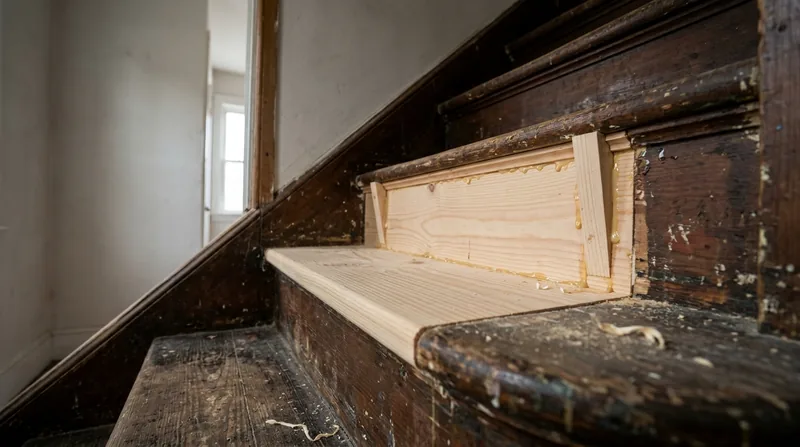




Bridgeport's steep staircases carry the daily traffic of a city built for work and family life. Victorian townhouses in Black Rock, the stacked front porches of West End two- and three-family houses, and the solid Colonial Revival homes of Brooklawn all depend on stairs that hold firm underfoot. Stair and railing repair in Bridgeport keeps those treads from squeaking, balusters from loosening, and stringers from sagging under decades of use. We repair and rebuild the wood stairs that define these neighborhoods, restore period railings to their original character, and install handrails and attic ladders that work as hard as the people who climb them. Salt air and freeze-thaw cycles don't spare wooden stairs any more than they spare sills or fascia, and moisture-driven wood movement is the enemy of a quiet, safe staircase. This guide covers what Bridgeport homeowners should know about keeping stairs sound, when repair makes sense, and what to expect when you call a carpenter.
Why Stair and Railing Repair Matters in Bridgeport's Historic Homes
Bridgeport's housing stock is built on old wood. The Victorian and Queen Anne houses of Black Rock, the factory-worker duplexes and triplexes of the West End and East Side, the Colonials and Tudors of Brooklawn, and the post-war Capes and ranches across the North End all contain stairs that have carried generations of footsteps. Most of these homes were built with old-growth framing lumber and solid hardwood treads, materials that last when they stay dry and crack and sag when moisture and seasonal wood movement take hold. Coastal humidity, nor'easters that push rain into the South End and Black Rock, and the winter freeze-thaw cycle all conspire to loosen fasteners, warp stringers, and eventually create squeaks, movement, and safety hazards.
- We tighten loose treads and risers by refastening them to the stringer with screws or wedges that stop squeaks and movement.
- We replace worn stringer boards when the wood has softened or cracked enough to no longer safely support the staircase.
- We restore or rebuild balusters and newel posts that have cracked, warped, or become loose at their joinery.
- We install or repair handrails and brackets to code-compliant standards so stairs are safe for children, elderly residents, and anyone with mobility concerns.
- We rebuild attic access ladders and fold-down stairs that have become stiff, wobbly, or unsafe to operate.
Addressing stair problems early prevents bigger failures and keeps your home safe and sound.
Key info: A squeaky stair is usually just loose fasteners, a ten-minute fix. A stringer that moves or bounces under weight signals wood that has swollen or softened from moisture, and that one requires replacement. Balusters that rattle loose in their sockets are a safety issue and need refastening or replacement. We inspect, diagnose, and propose the honest repair.
For more on how moisture and coastal climate affect wood in Bridgeport homes, see our guide to wood rot and dry rot repair.
How We Repair and Rebuild Stairs in Bridgeport Homes
Stair repair begins with a careful inspection. We climb the stairs, feel for movement, listen for squeaks, test the balusters and newel post by hand, and check the stringer for soft spots or cracks. We look for signs of water damage, wood rot, or carpenter ant activity that might compromise the structural integrity of the staircase. Once we understand what's loose, cracked, or failing, we propose the most practical repair. Often that's a simple refastening. Sometimes it's replacing a single component. Occasionally it's rebuilding the entire staircase. We work from the assumption that sound wood deserves repair, not replacement.
- We inspect the staircase top to bottom, testing for movement, squeaks, soft wood, and loose fasteners.
- We refasten treads and risers to the stringer using screws or wooden shims to eliminate squeaks and tighten the fit.
- We replace individual balusters or sections of railing that have cracked, warped, or become unsafe.
- We rebuild newel posts and handrail brackets, scribing and fitting new wood to match the original profile and joinery.
- We install new handrails, brackets, and safety components to meet current building code where required.
The result is a staircase that feels solid, sounds quiet, and performs safely for years to come.
Example: A three-family house on the East Side of Bridgeport had squeaky stairs on the second flight. We found the treads had shrunk slightly and pulled loose from the stringer fasteners during a dry winter. We refastened them with screws driven at an angle through the riser into the tread, then shimmed the gaps with hardwood wedges. The stairs are now solid and silent. Total time, two hours.
For finish carpentry work such as crown molding or custom trim that often pairs with stair rebuilds, see our finish and trim carpentry service.
Stair Repair Methods and When to Use Each
| Repair Method | What It Does | Best For |
|---|---|---|
| Refastening with screws and shims | Tightens loose treads and risers by driving new fasteners through riser into tread and filling gaps with wooden shims. | Squeaky stairs caused by wood shrinkage or loose original fasteners; sound wood that just needs to be pulled tight. |
| Stringer replacement | Removes the damaged stringer board and installs a new one, scribing to fit the treads and risers that remain sound. | Stringers with soft spots, cracks, or severe warping that no longer safely support the staircase structure. |
| Baluster and railing restoration | Refastens loose balusters at top and bottom, replaces cracked spindles, and restores newel posts and handrails to original profile. | Victorian and period staircases where original detail is intact but fasteners have loosened or a few spindles have failed. |
| Complete staircase rebuild | Disassembles the staircase, replaces stringers and treads as needed, restores railing to period spec, and reassembles with new fasteners. | Stairs with multiple failures, severe rot or damage, or where original character must be preserved for a historic home. |
| Handrail and safety upgrade | Installs new handrails, brackets, and baluster spacing to meet current building code for safety and accessibility. | Older stairs with inadequate handrails or baluster spacing, or where code compliance is required by permit or inspection. |
Stair and Railing Repair Cost in Bridgeport: What to Expect
Stair repair costs depend on what's actually wrong and what needs to be fixed. A simple refastening of loose treads and risers, the most common repair in Bridgeport homes, starts at $600 and can be completed in a few hours. Replacing a single stringer or rebuilding a section of railing runs $1,200 to $2,500, depending on the size and complexity of the work. A complete staircase rebuild, which includes new stringers, treads, and period railing restoration, typically ranges from $3,500 to $6,000 or more. The factors that move the price are the number of stairs, the condition of the wood, whether the staircase is a simple two-flight or a complex spiral or curved stair, and how much of the original detail must be matched or preserved.
Access and safety also affect cost. A staircase in the middle of an open living space is simpler to work on than one tucked in a narrow hallway or one that must be worked on while the house is occupied. If the staircase has soft wood or rot that wasn't visible at first, that adds time and material. We always inspect before quoting, so you know exactly what you're paying for and why.
We recommend getting 2 to 3 estimates before deciding. This helps you understand what different carpenters propose and why their approaches differ. For a full pricing overview and examples of common jobs, see our pricing guide.
Tip: If you have a staircase that's been squeaky or loose for years, the wood has likely adapted to that condition. Fixing it now costs less than waiting until a stringer fails and you need a full rebuild. Call for a free estimate and let us tell you what the actual repair is.
What to Look for When Hiring a Stair and Railing Repair Contractor Near Bridgeport
Choosing the right carpenter for stair work matters because stairs are a safety-critical component of your home. You want someone who understands wood movement, knows how to match period detail in an older home, and can explain what's wrong and why the repair he proposes is the right one. Here's what to ask about and verify before you book.
- Ask whether the contractor carries liability insurance and can provide a certificate of insurance upon request before the job starts.
- Get written estimates from at least two contractors so you can compare scope, materials, timeline, and price side by side.
- Check references by calling previous customers and asking whether the work was done on time, on budget, and to their satisfaction.
- Confirm that the contractor understands any local building code requirements for handrails, baluster spacing, or structural safety that may apply to your staircase.
- Ask whether the contractor has experience with the era and style of your home, especially if you have a Victorian, Colonial, or period-specific staircase.
- Verify that the contractor will obtain any required permits for structural work or alterations, and can explain what the permit process is in your city.
A good contractor will spend time on your stairs, ask questions about how they feel and what bothers you, and explain the repair in plain language. If someone tries to pressure you into an immediate decision or claims the stairs are unsafe without showing you why, get a second opinion.
Ready to get started? Contact us for a free estimate or call (475) 476-1794. We respond within 24 hours and never charge for the inspection and quote.
Stair & Railing Repair in Bridgeport: Pricing Guide
| Service | Price | Details |
|---|---|---|
| Stair refastening and tread tightening | Starting at $600 | Includes inspection, refastening loose treads and risers with screws and shims, and eliminating squeaks from wood shrinkage |
| Single stringer replacement or baluster repair | Starting at $1,200 | Includes removal and replacement of one stringer board or major railing section, fitted to existing treads and fastened securely |
| Complete staircase rebuild with railing restoration | Starting at $3,500 | Includes new stringers, treads, period railing restoration, handrails, and brackets, matching original detail and building code safety |
| Handrail and safety code upgrade | Starting at $800 | Includes new handrails, brackets, and baluster spacing adjusted to meet current building code for accessibility and safety |
| Travel and estimate | Free | No mileage fee within Bridgeport and surrounding service areas. Free inspection and written quote within 24 hours of your call |
Indicative pricing, the exact cost depends on square footage, finish, and site access. Free personalized estimate within 24h at (475) 476-1794.


