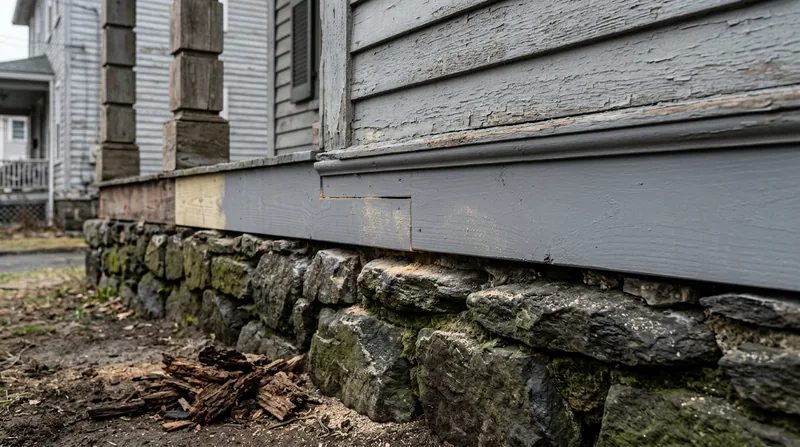




Bridgeport's Victorian mansions, Colonial Revival homes, and dense two- and three-family wood-frame houses sit in a climate that punishes wood. Salt air off Long Island Sound, freeze-thaw cycles that crack sills and fascia, and damp coastal fog create ideal conditions for wood rot and dry rot repair to become a regular maintenance issue. Whether it's a sill plate resting on old fieldstone, clapboard siding absorbing wind-driven rain, or a porch deck taking the brunt of winter snow and spring melt, the wood in Bridgeport's older homes faces relentless moisture. We cut out decayed wood, treat the surrounding framing, and rebuild with rot-resistant lumber, a permanent repair that stops the deterioration before it reaches the framing beneath. This isn't a cosmetic patch or a temporary fix. It's structural carpentry done right, the same way it's been done for over a century in homes built to last.
Why Wood Rot and Dry Rot Repair Matters in Bridgeport's Coastal Climate
Bridgeport sits at the mouth of the Pequonnock River where it meets Long Island Sound, and that geography shapes every wood failure in the city. The salt-laden air accelerates wood decay, especially on south and west-facing siding, fascia, and trim. Freeze-thaw cycles crack paint seals and open pathways for water to penetrate. Nor'easters and tropical storms drive rain horizontally into siding and porch decks. Winter ice dams back water up under eaves and into the soffit. Basements stay damp year-round, especially in the South End and Black Rock neighborhoods near the water. All of this means wood rot isn't a rare catastrophe in Bridgeport homes, it's an expected maintenance item that hits sill plates, window sills, porch framing, and exterior trim on a predictable schedule.
- Sill plates absorb moisture from old fieldstone foundations and begin to soften and lose structural integrity within 10 to 15 years of exposure.
- Porch decks and framing rot from below because they trap moisture and receive direct winter snow load and spring melt runoff.
- Fascia and soffit rot when gutters clog or pull away from the house, allowing water to run behind the trim and saturate the wood.
- Window sills and casings fail when caulk cracks or paint peels, letting water wick into the wood grain and freeze in winter.
- Exterior shingle and clapboard siding rots at the butt ends where water pools and the wood grain is exposed.
Left unaddressed, wood rot spreads into floor joists, rim joists, and load-bearing studs, turning a localized repair into a structural carpentry job. Catching it early and removing the decayed wood stops that progression.
Local reality: In Bridgeport's East End and Hollow neighborhoods, two- and three-family homes built for factory workers in the early 1900s often have porch decks that sit directly on the ground or on shallow wood posts. Those decks rot from underneath and are invisible until the wood softens enough to feel spongy underfoot. Catching that decay and replacing the framing before the porch becomes a liability is why homeowners call us in spring.
For more on related structural failures, see our guide to floor joist and subfloor repair in Bridgeport.
The Connecticut Department of Consumer Protection maintains information on contractor licensing and complaints at portal.ct.gov/DCP, a resource for verifying contractor standing in the state.
How We Repair Wood Rot: The Bridgeport Carpentry Approach
Our method starts with a thorough inspection to identify how far the decay has spread. We use a moisture meter and a sharp tool to probe suspect wood and determine whether the rot is surface-level, intermediate, or deep into the structural member. We photograph the damage to help document it for insurance claims if needed. Once we know the scope, we remove all decayed wood with a chisel and handsaw, cutting back to solid heartwood. We then treat the surrounding wood with a borate solution to arrest any incipient decay and prevent carpenter ants from colonizing the area. Finally, we rebuild with pressure-treated lumber or naturally rot-resistant species like redwood or Douglas fir, depending on the application and the homeowner's preference.
- We inspect the damage with a moisture meter and probe tool to determine the depth and extent of decay.
- We remove all soft wood back to solid grain, creating a clean edge for the new lumber to bond against.
- We treat the surrounding wood with a borate preservative to stop active decay and deter future insect damage.
- We cut and fit new lumber to match the original profile, dimension, and grain orientation of the wood we removed.
- We prime and paint all new exterior wood before we leave the job, so the repair is water-sealed from day one.
- We document the work with photos and notes that you can share with your insurance company if a claim is pending.
This methodical approach means your repair lasts decades, not seasons. The new wood is sealed, the surrounding framing is treated, and the source of moisture is addressed so the rot doesn't return.
Real example: A 1920s Colonial Revival home in Brooklawn had a rotted sill plate under the front wall, visible as soft, splintered wood where the clapboard met the foundation. We removed 4 feet of the decayed sill, treated the rim joist and foundation wall with a borate solution, and installed a new pressure-treated sill plate with a gasket between it and the stone foundation. The repair took one day and cost $1,200. Without it, water would have continued wicking into the rim joist and floor framing, potentially requiring a much larger structural carpentry job within five years.
For additional details on structural framing repairs, visit our page on framing and structural carpentry in Bridgeport.
Wood Rot and Dry Rot Repair Methods: Which Approach Fits Your Home
| Approach | Description | Best for |
|---|---|---|
| Localized removal and rebuild | We cut out the decayed section, treat the surrounding wood, and install new lumber sized and finished to match the original. | Window sills, siding patches, fascia, porch trim, and sill plates where the rot is confined to one area and the structural member is otherwise sound. |
| Sister joist or beam reinforcement | We install a new joist or beam alongside a partially decayed structural member, bolting the two together to share the load. | Floor joists, rim joists, and beams where decay is moderate and the wood is still load-bearing but weakened, and replacement would require temporary support. |
| Full member replacement | We remove the entire decayed joist, beam, or sill plate and install a new one, with temporary support in place during the work. | Load-bearing structural members where decay is extensive, the wood has lost significant strength, or the member is undersized for modern code. |
| Epoxy consolidation and filling | We clean out the soft wood, apply a hardening epoxy resin to consolidate the remaining wood grain, and fill voids with epoxy filler. | Decorative trim, architectural woodwork, and heirloom details where preservation of the original wood is desired and structural loading is light. |
The right approach depends on how deep the rot runs, how much load the member carries, and whether you want to preserve the original wood or replace it. We assess each situation on site and recommend the most durable and cost-effective option.
Wood Rot and Dry Rot Repair Cost in Bridgeport: What to Expect
Wood rot repair in Bridgeport typically starts at $650 for small, localized repairs like a rotted window sill or a 2-foot section of fascia. Larger jobs, such as replacing a full sill plate under a 20-foot wall or repairing multiple porch framing members, run $1,500 to $3,500. Full floor joist or beam replacement is higher and often requires temporary support, which adds labor and materials. The cost depends on several concrete factors: how much wood needs to come out, whether the repair is accessible or requires scaffolding, what lumber species you choose, and whether surrounding framing also needs treatment or reinforcement.
Getting two or three estimates is smart. Each contractor may recommend a different approach (localized repair versus full replacement), and the price will reflect that choice. Ask each one to explain why they recommend their method and what the repair will cost to maintain over the next 10 years. Our estimate is free and comes with a detailed written breakdown of the work and materials, so you can compare apples to apples.
For a full pricing overview and examples of typical jobs, see our wood rot repair pricing page.
Wood Rot and Dry Rot Repair Near Me: What Bridgeport Homeowners Should Know When Hiring a Carpenter
Finding a reliable carpenter for wood rot repair means checking a few key things. First, confirm the contractor is fully insured and carries general liability and workers compensation. Ask for references from recent jobs in Bridgeport or nearby towns like Stratford, Fairfield, and Trumbull, and call at least two to ask about the quality of the work and whether the repair has held up. Request a written estimate that breaks down labor, materials, and any travel costs, so you know what you're paying for. For structural repairs, such as full joist or beam replacement, ask whether a permit is required. Rules vary by the scope of the work and the age of your home, so contact the Bridgeport Building Department or your local code official to confirm. If your home is on a historic register or in a protected district, HOA rules may also apply. Get that clarity before you sign a contract.
- Verify the contractor carries full insurance and ask to see a current certificate of insurance before work begins.
- Request at least two references from completed jobs in Bridgeport or the surrounding area and follow up with phone calls to verify the work quality.
- Get a written estimate that itemizes labor hours, material costs, and any additional fees, so there are no surprises.
- Confirm whether a permit is needed for your repair by contacting the Bridgeport Building Department, especially for structural work.
- If your home is in a historic district or subject to HOA rules, check those requirements before hiring to avoid delays or rework.
- Ask the contractor to explain their approach and why they recommend it over alternatives, so you understand the repair method.
A good carpenter will answer your questions clearly, provide references you can call, and stand behind the work with a warranty. Don't rush the hiring process. The right contractor will save you money in the long run by getting the repair right the first time.
Ready to get started? Contact us for a free estimate, or call (475) 476-1794 to discuss your repair.
Wood Rot & Dry Rot Repair in Bridgeport: Pricing Guide
| Service | Price | Details |
|---|---|---|
| Small localized repair | Starting at $650 | Window sill, fascia section, or trim patch; includes removal, borate treatment, new lumber, prime and paint |
| Medium repair | Starting at $1,200 | Sill plate section, porch framing, or multiple trim areas; includes inspection, treatment of surrounding wood, new lumber, and finishing |
| Large structural repair | Starting at $2,500 | Full floor joist, beam, or extensive sill plate replacement; includes temporary support, borate treatment, new lumber, and structural reinforcement as needed |
| Full member replacement | On estimate | Load-bearing joist, beam, or sill plate where decay is extensive and the entire member must be removed and rebuilt with temporary support |
| Travel | Included | No separate mileage or travel fee for jobs in Bridgeport and surrounding service areas within 15 miles |
| Free estimate | Free | On-site inspection with written breakdown of materials and labor; response within 24 hours, no obligation to book |
Indicative pricing, the exact cost depends on square footage, finish, and site access. Free personalized estimate within 24h at (475) 476-1794.


