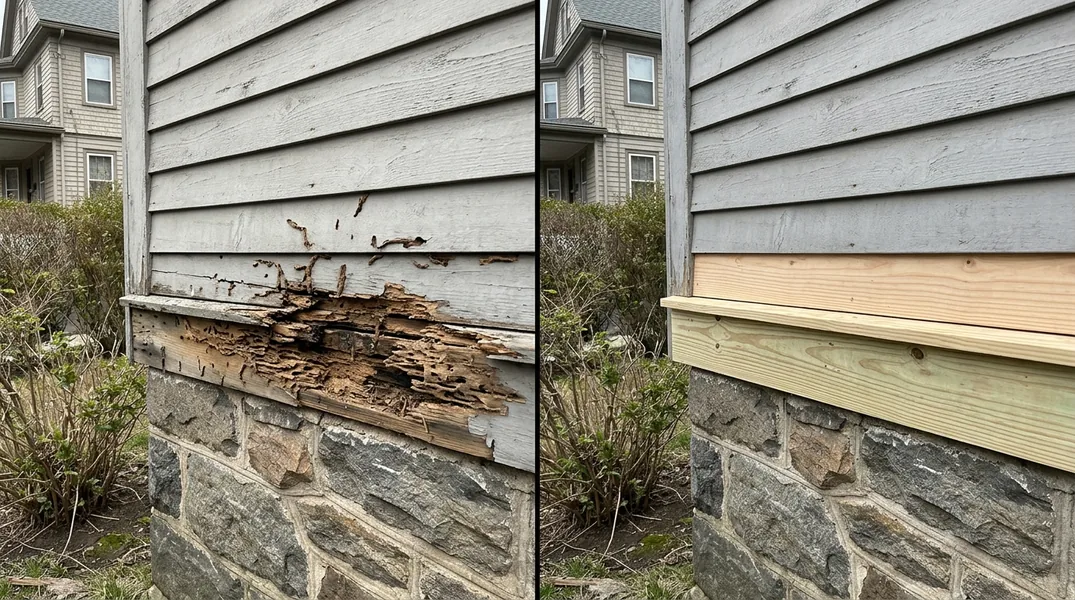
Why It Matters: The Cost of Misidentification
If you've noticed soft, crumbling wood around your Bridgeport home, you're facing one of three common culprits: dry rot, carpenter ants, or termites. Each requires a completely different treatment approach, and getting it wrong can cost thousands of dollars in unnecessary repairs or allow the real problem to worsen unchecked.
Many homeowners make the mistake of assuming all wood damage looks the same. In reality, dry rot is a fungal decay issue, carpenter ants are wood-boring insects that nest inside structural timber, and termites are voracious wood-eating pests that can compromise your home's integrity in months. Understanding which problem you're dealing with is the first step toward protecting your investment and your family's safety.
What Does Wood Rot Look Like? Identifying Dry Rot
Dry rot is perhaps the most deceptive wood damage because it often hides inside walls and structural cavities before becoming visible. When you do spot it, dry rot typically appears as wood that has become soft, spongy, and darkened, often with a distinctive cube-like cracking pattern on the surface. Unlike wet rot, which requires constant moisture, dry rot can spread through timber even in relatively dry conditions, making it particularly dangerous in older homes.
The fungus responsible for dry rot thrives in poorly ventilated, damp environments. You might notice a musty odor near affected areas, or see fine dust around wood that appears to be deteriorating. In advanced cases, wood affected by dry rot becomes so weakened that it can be easily crumbled by hand. If you suspect dry rot in your Bridgeport home, Wood Rot & Dry Rot Repair should be your priority, as the fungus will continue spreading until treated professionally.
Carpenter Ant Damage vs. Termite Damage: Key Differences
Carpenter ants and termites both damage wood, but they do so in fundamentally different ways. Carpenter ants don't eat wood; they tunnel through it to create galleries where they nest and raise their colonies. This means the wood they damage often contains visible sawdust or frass (ant droppings), and you may actually see the ants themselves, especially during spring and early summer when they swarm. Carpenter ant tunnels are clean and smooth, almost like someone has carefully carved pathways through the timber.
Termites, by contrast, actually consume the wood as food. They leave behind a honeycomb-like structure inside the timber, and the damage often appears more hollow and less organized than carpenter ant galleries. Termites also produce a different type of frass that looks like tiny pellets, and they typically work silently and invisibly, which is why termite infestations can become catastrophic before a homeowner even realizes there's a problem. If you've discovered Termite Damage Repair is needed, time is critical.
Signs of Termite Damage in Wood: What Homeowners Should Know
Termite damage often goes unnoticed until it's severe because termites work from the inside out. You might see mud tubes running along foundation walls or basement joists, these are highways that termites use to travel between the soil and your home's wood. You may also notice that paint or wood veneer is bubbling or peeling, which happens as termites tunnel just beneath the surface. In some cases, you'll hear a faint clicking or rustling sound inside walls, which is the sound of termites working.
One of the most telling signs of active termite infestation is the presence of discarded wings near windowsills or light fixtures during swarming season, typically in spring. If you tap on wood you suspect is termite-damaged, it will sound hollow. The damage tends to follow the grain of the wood, and affected areas may feel papery or thin to the touch. Termites are particularly destructive to Floor Joist & Subfloor Repair projects because they target the structural wood that supports your home's weight-bearing systems.
Dry Rot vs. Termite Damage: Moisture and Location Clues
One of the most useful ways to distinguish between dry rot and termite damage is to consider moisture and location. Dry rot requires moisture to develop, so you'll typically find it in areas prone to water intrusion: around windows, in basements with poor drainage, near roof leaks, or in crawl spaces with high humidity. The wood affected by dry rot will often feel damp or show signs of water damage nearby. Termites, however, can thrive in both wet and dry wood, though they do need access to soil moisture. They're more likely to be found in areas with direct soil contact, such as foundation walls, basement joists, or wooden posts embedded in concrete.
Another distinguishing factor is the pattern of damage. Dry rot spreads outward from a central point of moisture, creating a localized area of decay that may eventually spread if conditions remain damp. Termite damage, by contrast, can be scattered throughout a structure as different colonies tunnel independently. If you're seeing damage in multiple areas of your home with no obvious water source, termites are more likely the culprit. Both problems require professional intervention, but understanding these differences helps you communicate more effectively with a carpenter or pest specialist about what you're observing.
When to Call a Professional: Getting Your Free Estimate
If you've identified any of these wood damage issues in your home, don't wait. All three problems, whether dry rot, carpenter ants, or termites, will worsen over time and become exponentially more expensive to repair. The structural integrity of your home depends on sound timber, and once wood has begun to fail, it compromises everything that depends on it for support.
Bridgeport Carpentry specializes in identifying and repairing all types of wood damage. Whether you need Wood Rot & Dry Rot Repair, Termite Damage Repair, or structural restoration work like Beam Replacement & Load-Bearing Wall Removal, we can assess the damage and provide a clear path forward. Call us at (475) 476-1794 or visit our website to request a free estimate. Our experienced team will help you understand exactly what you're dealing with and what repairs are necessary to keep your home safe and structurally sound.
Looking for a professional carpentry contractor in Bridgeport? Bridgeport Carpentry responds fast for all your carpentry needs.
Get a Free QuoteOur services: Wood Rot & Dry Rot Repair · Termite Damage Repair · Floor Joist & Subfloor Repair