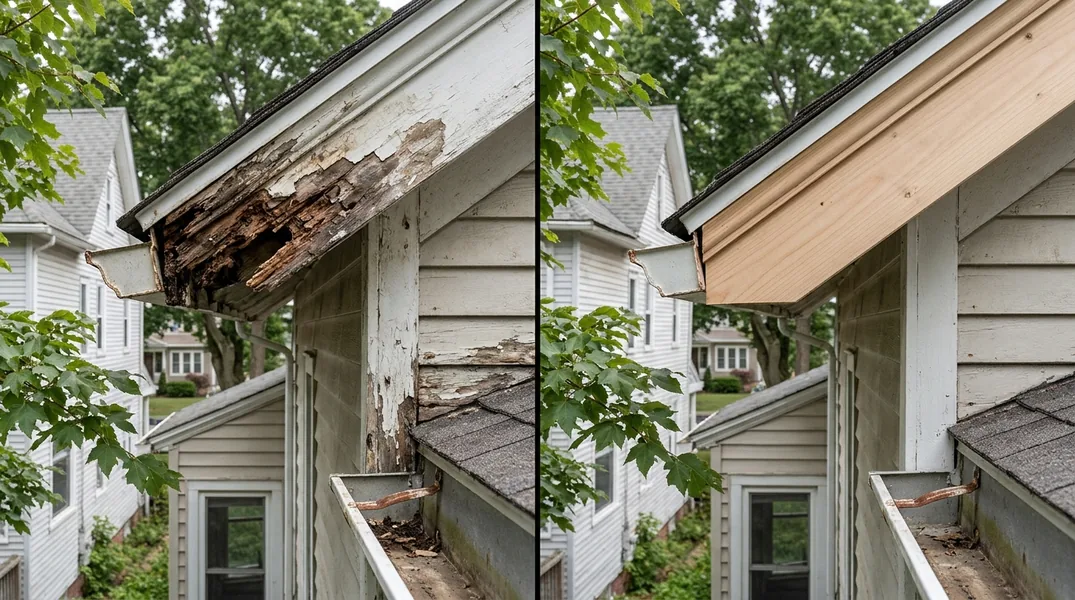
Why Victorian and Three-Family Homes Demand Different Wood Care
A Black Rock Victorian or a classic Bridgeport three-family isn't just a house. It's a piece of architectural history, a financial investment, and often a family legacy. But that charm comes with a responsibility that modern homes don't demand: understanding the unique vulnerabilities of older wood construction.
Victorian homes, built between the 1880s and early 1900s, were constructed with different materials and methods than today's homes. The wood framing, exterior siding, and structural beams were often harvested from old-growth timber that had different properties than modern lumber. Three-family homes, which dominated Bridgeport's neighborhoods during the early 20th century, faced constant stress from multiple households, shared walls, and years of deferred maintenance. These older structures are also more exposed to the elements because of their age, and wood deterioration accelerates faster than most homeowners realize.
The honest truth is this: wood rot doesn't announce itself. It starts silently in hidden spaces where moisture accumulates. By the time you notice soft spots on a windowsill or a spongy floorboard, the problem has likely been developing for months or even years. Understanding the specific risks your home faces is the first step toward protecting it.
The Two Enemies of Old Wood: Dry Rot and Wet Rot
Most homeowners use the term 'wood rot' generically, but there's an important distinction between dry rot and wet rot, and the difference matters for how you treat the problem. Wood Rot & Dry Rot Repair requires understanding which type you're dealing with.
Wet rot, the more common problem in Bridgeport's humid climate, occurs when wood moisture content exceeds 20 percent. This happens around leaking gutters, failed flashing, plumbing leaks, or areas where water pools against the foundation. Wet rot tends to stay localized because it needs constant moisture to spread. The wood becomes soft, darkens, and eventually crumbles. The silver lining: if you eliminate the moisture source, wet rot stops progressing.
Dry rot is the more insidious threat. Despite its name, dry rot actually needs some moisture to start, but once established, it can spread through wood even in seemingly dry conditions. It's caused by specific fungi that consume the wood's cellulose, leaving a brittle, cube-like residue. Dry rot can travel through masonry and even behind paint, which is why it's sometimes called the 'silent killer' of old buildings. A small patch in one corner of an attic can eventually compromise structural integrity if left untreated.
Victorian homes and older three-family buildings are particularly vulnerable because their original construction often lacked proper vapor barriers and ventilation. Water that enters through aging roofs, compromised exterior walls, or foundation cracks gets trapped inside the structure where it feeds rot for years before anyone notices.
Wood Siding Repair: The First Line of Defense
Your home's exterior wood siding is like skin. It's the primary barrier between your home's wooden frame and the elements. On a Victorian with ornate trim or a three-family with original clapboard siding, that barrier is aging and under constant assault from rain, snow, UV exposure, and temperature swings. Wood Rot & Dry Rot Repair often starts with addressing compromised siding before it allows water to penetrate deeper into the structure.
Cracked, peeling, or missing paint on wood siding isn't just cosmetic. It's a gateway for moisture. Paint failure accelerates dramatically on older homes because the wood underneath has absorbed decades of weather exposure. Once paint fails, bare wood absorbs rainwater like a sponge. Within months, soft spots develop. Within a year or two, the rot extends into the framing behind the siding.
The honest assessment: not all wood siding damage requires full replacement. Small areas of soft wood can be cut out and patched with epoxy fillers or new wood pieces. Larger sections may need board replacement. The key is catching the problem early. If you notice soft siding, unusual paint bubbling, or wood that feels spongy to the touch, that's your signal to get a professional inspection. Delaying this decision typically means the repair scope doubles or triples within a year or two.
Historic Home Maintenance in Bridgeport: What Inspectors Miss
A standard home inspection is valuable, but it's not designed specifically for the quirks of Victorian or three-family construction. Many inspectors spend 2 to 3 hours in a home and focus on major systems. They may not climb into tight attic spaces, probe hidden corners of basements, or understand the specific vulnerabilities of 1890s framing techniques.
Here's what homeowners often don't learn from a standard inspection: the original cast iron drain pipes in a three-family are probably corroded internally, even if they look fine from outside. The roof sheathing under that Victorian's slate roof may be rotted because water has been seeping around flashing for a decade. The band board where the first floor meets the foundation is a moisture trap that's almost invisible until you know where to look. These aren't flaws in the inspection process; they're just the reality of older homes.
In Bridgeport, where many neighborhoods are dominated by homes built before 1920, this knowledge gap creates risk. Homeowners inherit problems they didn't know existed. The solution is proactive inspection by someone who specializes in older construction. If you own a Victorian or three-family, budgeting for a specialized inspection every 3 to 5 years is honest maintenance planning. This isn't paranoia; it's the difference between catching rot early and facing structural repairs that cost tens of thousands of dollars.
Floor Joist and Structural Concerns: When Rot Becomes Serious
Wood rot that starts in exterior siding or attic spaces is bad enough. But when moisture reaches floor joists or structural beams, the stakes change dramatically. Floor Joist & Subfloor Repair is significantly more complex and expensive than surface-level wood repair because it involves the bones of your home.
In a three-family home, floor joists carry the weight of multiple units stacked vertically. When those joists weaken from rot, floors can begin to sag, doors stop closing properly, and cracks appear in plaster walls. Tenants might notice sloping floors or cracked ceilings before you do. In a Victorian, compromised joists under a second floor can create dangerous conditions. The problem cascades quickly once structural wood starts failing.
The honest reality: Floor Joist & Subfloor Repair usually requires temporary support beams, careful removal of damaged wood, and either sister joists (new lumber bolted alongside damaged joists) or full joist replacement. This is not a DIY project. It requires structural calculations, building permits, and professional installation. However, addressing floor joist rot early, when only a section needs repair, costs substantially less than waiting until half the joist is compromised and the floor is actively sagging. Getting a free estimate from a carpenter experienced with older homes is the smart first step if you suspect joist damage.
Wood Rot & Dry Rot Repair Cost in Bridgeport: What to Budget
Cost is the question every homeowner asks, and it deserves an honest answer. The pricing for wood rot repair varies wildly depending on the scope, location, and severity of the damage. A small patch of wet rot in exterior siding might cost $300 to $800. A larger section requiring board replacement could run $1,500 to $3,500. But structural repairs are different.
If dry rot has penetrated into roof framing or floor joists, or if water damage affects multiple areas of your home, you're looking at $5,000 to $25,000 or more. A full beam replacement can easily exceed $10,000. These numbers sound alarming, but they're realistic for older homes in Bridgeport where construction methods and material availability differ from modern repairs.
Here's the financial truth that homeowners need to hear: delaying wood rot repair is never cost-effective. A $1,500 repair today becomes a $8,000 repair in two years if you wait. Moisture spreads. Rot accelerates. What started as localized damage becomes systemic. If you're budgeting for home maintenance on a Victorian or three-family, allocate 1 to 2 percent of your home's value annually for unexpected repairs. For a $300,000 home, that's $3,000 to $6,000 per year. This sounds high until you realize that major structural repairs can easily exceed $20,000 to $50,000. Prevention through regular inspection and early repair is the financially responsible approach.
Taking Action: Your Next Steps as a Historic Home Owner
If you own a Victorian or three-family in Bridgeport and you're reading this, you probably have a nagging concern about your home's condition. Maybe you've noticed soft spots, maybe you're worried about what's hidden behind the walls, or maybe you've just realized your home is older than you thought and you're wondering what that means for maintenance.
The first step is honest assessment. Walk your home systematically. Check windows and doors for water stains. Look at gutters and downspouts for signs of overflow or blockage. Press on exterior wood trim with a screwdriver. Soft spots mean moisture is present. In the basement or crawlspace, look for water stains on framing, musty smells, or visible mold. In the attic, check for roof leaks, water damage, or dark spots that indicate past moisture problems.
If you find concerns, don't panic and don't ignore them. Call Bridgeport Carpentry at (475) 476-1794 for a professional inspection. A trained eye can distinguish between cosmetic issues and genuine structural threats. Many problems that look scary are actually manageable if addressed promptly. Others might be less serious than they appear. Either way, you'll have facts instead of worry, and you can make informed decisions about your home's future.
Your Victorian or three-family home has survived over a century. With honest maintenance and professional attention to wood rot when it appears, it will survive another century. That's not just home ownership; that's stewardship of a piece of your community's history.
Looking for a professional carpentry contractor in Bridgeport? Bridgeport Carpentry responds fast for all your carpentry needs.
Get a Free QuoteOur services: Wood Rot & Dry Rot Repair · Termite Damage Repair · Floor Joist & Subfloor Repair