Why Is My Floor Sagging? Common Causes in Older Bridgeport Homes
If you own an older home in Bridgeport, a sagging floor is more than just an annoyance. It's a warning sign that something structural needs attention. The good news is that understanding the root cause is the first step toward fixing it properly and protecting your home's value.
The most common culprit behind sagging floors is damage to the floor joists, the horizontal wooden beams that support your flooring system. When these joists weaken, the floor above them begins to settle and sag. Several factors can compromise joist integrity over time. Wood Rot & Dry Rot Repair is one of the leading causes, especially in Bridgeport where older homes have been exposed to decades of moisture and humidity. Dry rot in particular can silently destroy wood from the inside out, making joists brittle and unable to bear weight effectively.
Beyond rot, Termite Damage Repair is another serious concern for homeowners in this region. Termites tunnel through wood, creating hollow galleries that drastically reduce structural strength. Settlement of the home's foundation, inadequate support beams, and age-related wood deterioration also contribute to floor sag. In some cases, the original construction simply didn't provide enough support for modern living loads, especially if the home was built over a century ago.
How Floor Joist Repair Works: Sistering and Other Solutions
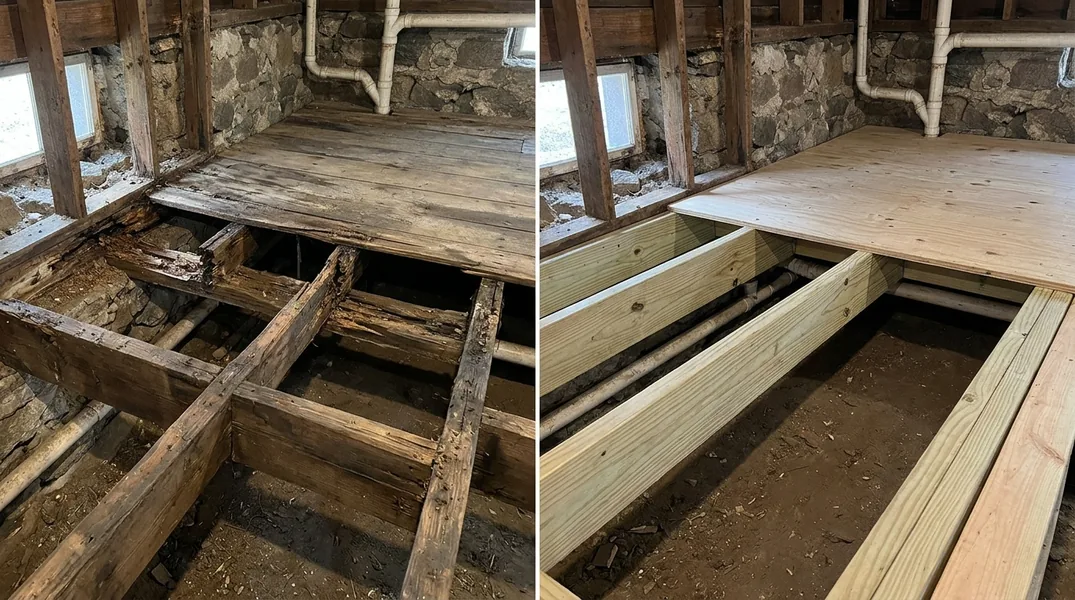
Floor Joist & Subfloor Repair typically involves one of several approaches, depending on the extent of damage and the structural requirements of your home. The most common method is called sistering, which is a proven technique that reinforces weakened joists without requiring complete replacement.
Sistering floor joists involves installing a new, sound piece of lumber alongside the damaged joist and fastening them together securely. This essentially doubles the strength of that support beam. The sister joist is cut to length, positioned tightly against the original beam, and then bolted or nailed at regular intervals along its entire length. This method is ideal when the damage is moderate and localized to specific joists. It's less disruptive than full joist replacement and often more cost-effective, making it a popular choice for homeowners managing their budgets.
In cases where damage is severe or widespread, full joist replacement may be necessary. This involves removing the damaged joist entirely and installing a new one in its place. For more complex structural issues, a Beam Replacement & Load-Bearing Wall Removal specialist may need to assess whether the foundation beam or support posts also require attention. Sometimes the real problem isn't just the joists themselves, but the beam or posts they rest on. A professional inspection will determine the best approach for your specific situation.
Sagging Floor Repair Cost in Bridgeport: What to Budget
The cost of repairing sagging floors varies significantly based on the underlying cause, the number of joists affected, and the repair method chosen. For homeowners in Bridgeport, it's important to understand that this is not a one-size-fits-all expense. A simple sistering project on one or two joists might run $800 to $2,000, while more extensive repairs involving multiple joists or full replacements can easily exceed $5,000 to $10,000 or more.
Several factors influence the final bill. The accessibility of the joists plays a major role. If your crawl space or basement is tight and difficult to navigate, labor costs will be higher. The type of wood damage also matters significantly. If the issue is primarily wood rot, the carpenter must remove all compromised material before installing new joists or sisters, adding time and expense. If termite damage is involved, you may also need to coordinate with a pest control professional, which adds to the overall project cost. Additionally, if the sagging is severe enough that temporary support beams are needed during repair, that's an extra expense to factor in.
To get an accurate understanding of pricing for your specific situation, it's essential to have a professional inspection and estimate. Bridgeport Carpentry offers a free estimate for floor joist and sagging floor issues. During this assessment, a carpenter will identify exactly which joists are compromised, measure the scope of work, and provide a transparent quote. This takes the guesswork out of budgeting and ensures you're not surprised by hidden costs later.
Signs Your Floor Needs Professional Attention Soon
Recognizing the early warning signs of floor damage can save you thousands of dollars in repairs down the line. The most obvious sign is visible sagging or a noticeable dip in the floor when you walk across it. You might notice that a marble rolls toward the center of a room, or that doors don't close properly because the frame has shifted. These are clear indicators that the floor structure is no longer level.
Beyond visual signs, pay attention to creaking, bouncing, or springy sensations when you walk on the floor. This suggests that joists have lost rigidity and can no longer support weight as designed. In basements or crawl spaces, look for visible wood rot, discoloration, soft spots on joists, or evidence of moisture damage. If you see mold, mildew, or standing water, these are red flags that wood deterioration is likely underway. A musty smell in the basement or crawl space is another indicator of moisture problems that will eventually compromise floor joists if left unaddressed. Don't wait for the problem to worsen. Early intervention makes repairs simpler and less expensive than dealing with advanced structural damage.
When to Call a Professional Floor Repair Contractor Near Me
While minor cosmetic floor issues might be handled as DIY projects, sagging floors and joist damage absolutely require professional assessment and repair. Structural work is not something to guess at or attempt without proper training, tools, and experience. A mistake in floor joist repair can compromise the entire structural integrity of your home, creating safety hazards and liability issues.
A qualified carpenter will know how to properly diagnose the root cause, determine whether sistering or full replacement is appropriate, ensure that new joists meet local building codes, and install temporary support if needed during the work. They'll also know when to involve other specialists, such as moisture control experts or foundation engineers. In Bridgeport, Bridgeport Carpentry has years of experience addressing floor joist problems in older homes. If you're noticing any signs of floor sag or suspect joist damage, don't delay. Call (475) 476-1794 today or visit the website to request a free estimate. A professional inspection will give you peace of mind and a clear action plan for protecting your home.
Preventing Future Floor Damage: Maintenance Tips
Once your sagging floor has been repaired, the best investment you can make is preventive maintenance. Most floor joist problems stem from moisture exposure, so controlling humidity and water intrusion in your basement or crawl space is paramount. Ensure that gutters and downspouts direct water away from the foundation. Seal any cracks in the foundation, and consider installing a sump pump or dehumidifier in damp crawl spaces.
Regular inspections are also critical. Visit your basement or crawl space at least twice a year to look for signs of moisture, mold, or wood damage. Catch problems early, and you'll avoid the expensive repairs that come with advanced deterioration. Keep an eye out for any new sagging or movement in the floor, and address it immediately if noticed. Proper ventilation in crawl spaces helps prevent moisture buildup. If you've had wood rot or termite damage in the past, consider ongoing pest prevention measures as well. By staying proactive, you'll extend the life of your floor structure and protect one of your home's most important investments.
Looking for a professional carpentry contractor in Bridgeport? Bridgeport Carpentry responds fast for all your carpentry needs.
Get a Free QuoteOur services: Wood Rot & Dry Rot Repair · Termite Damage Repair · Floor Joist & Subfloor Repair